

Top mortgage conditions!


BarmeniaGothaer combines personal advice with smart digital insurance solutions for individuals and businesses. Reliable, modern, and customer-focused.
Foreign real estate investment in Germany
The legal requirements for foreign investors seeking to invest in real estate in Germany are relatively investor-friendly. Germany does not impose any special restrictions on foreign capital in the real estate sector. However, there are several legal and tax-related aspects that should be taken into account.
What is a “share deal” in German real estate transactions?
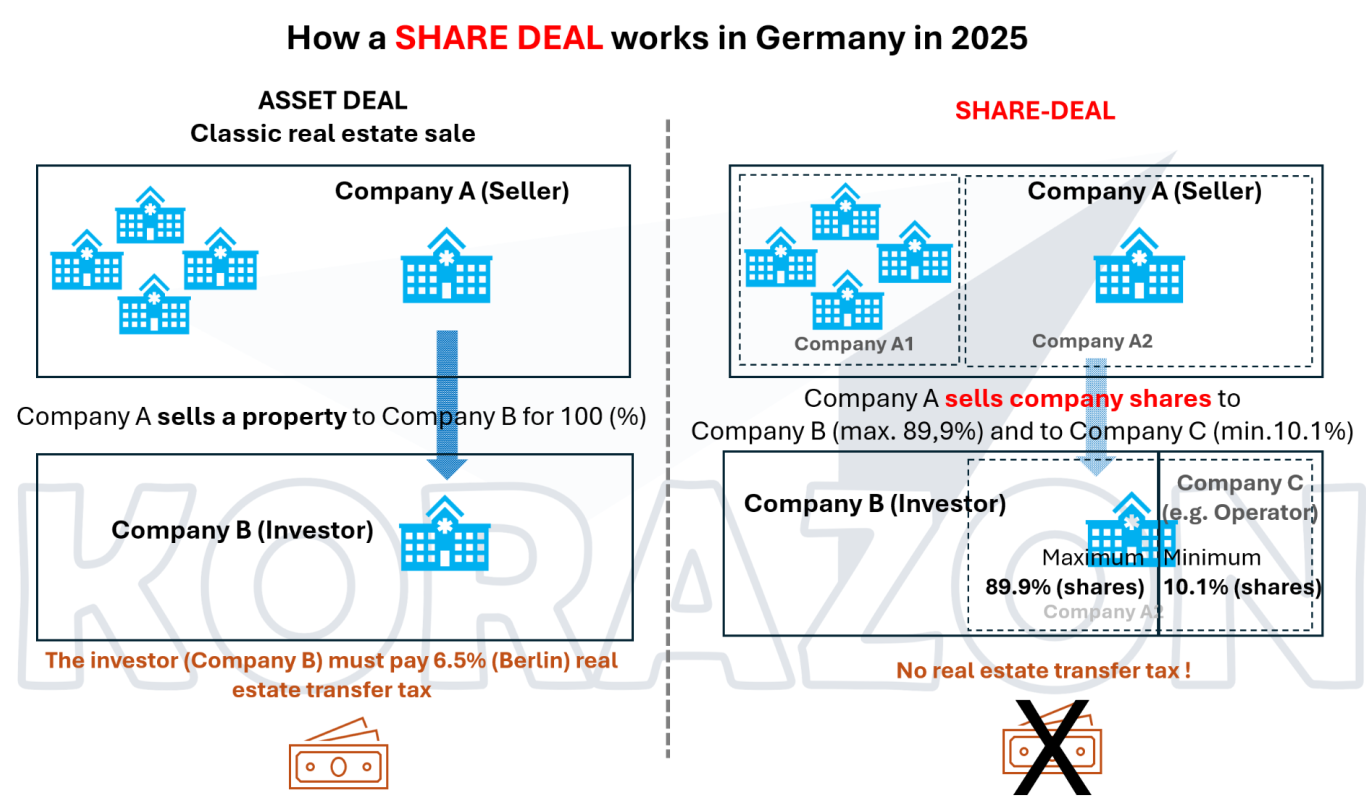
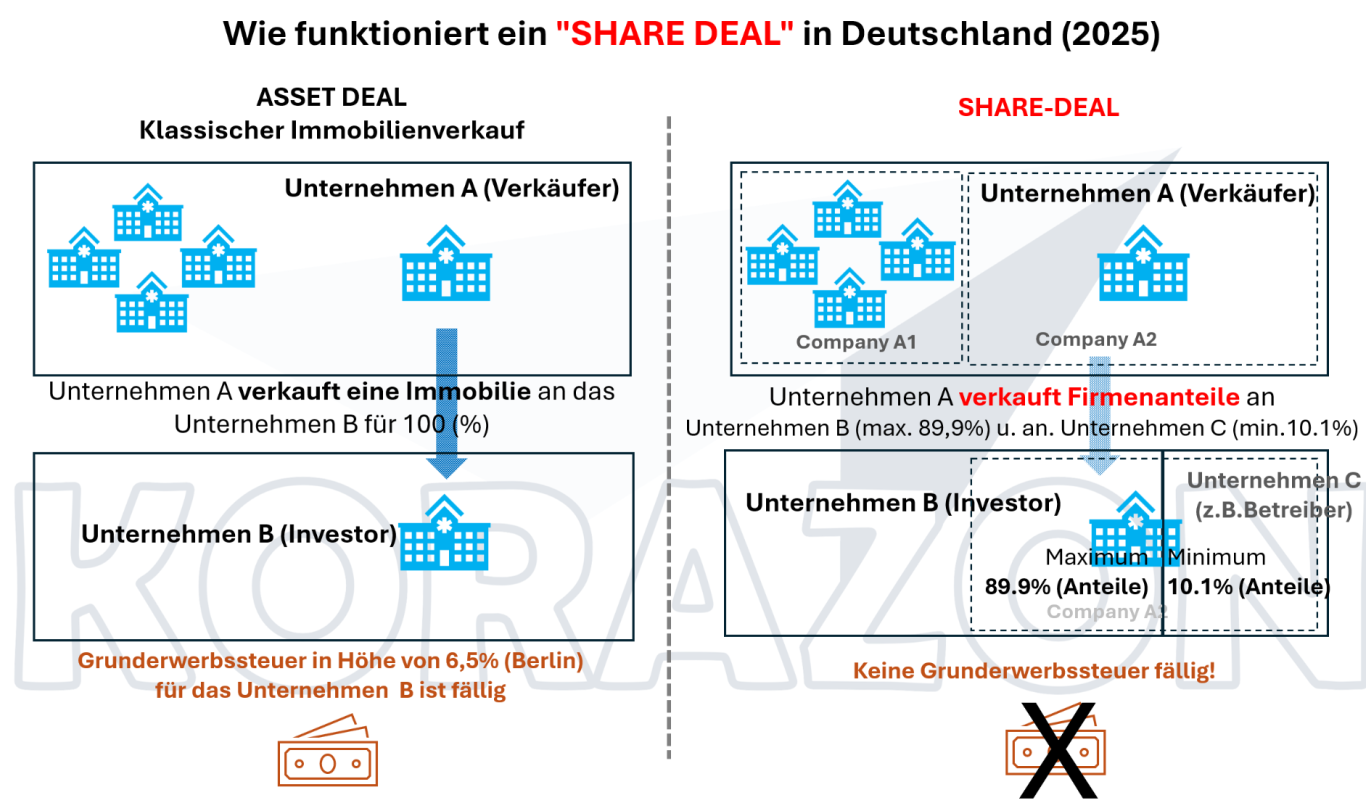
In German real estate transactions, a “share deal” means that the buyer does not purchase the property directly. Instead, the buyer acquires shares in the company that owns the property. Legally, the property remains with that company, but economically the investor gains control over the real estate through the acquisition of the company. The German Federal Ministry of Finance describes share deals as transactions involving the acquisition of shares in a real-estate-owning company.
This is different from an “asset deal,” where the land or building itself is transferred directly to the buyer. In practice, a share deal can produce a similar economic result to a direct property acquisition, but the legal structure is different.
Share deals became especially important in Germany because they were often used in connection with real estate transfer tax. Germany tightened these rules in 2021: the relevant threshold was reduced from 95% to 90%, and the period was extended from five years to ten years. This means that a share deal may still trigger real estate transfer tax depending on the percentage acquired, the timing, the legal form of the company, and whether ownership is direct or indirect.
A simple example: if a GmbH owns a building in Berlin and an investor buys the shares of that GmbH instead of buying the building itself, that is a share deal.
In one sentence:
A share deal means buying the company that owns the property, instead of buying the property itself.
What is a “asset deal” in German real estate transactions?
in substantive terms, an asset deal in a German real estate transaction means that the property itself is sold and transferred directly. In other words, the buyer acquires the land or building itself directly from the seller, and not the shares in a company that owns the property.
In practice, this means that a classic real estate purchase agreement is concluded. However, the buyer does not become the legal owner simply by signing the contract, but only once the transfer has been registered in the land register.
The key difference from a share deal is this:
In an asset deal, the property itself changes ownership.
In a share deal, the property remains with the existing company, and what is sold instead are the shares in that company.
Another important point is that an asset deal generally makes it possible to transfer specific individual assets. This means that the buyer can selectively acquire certain assets instead of taking over the entire company with all of its risks.
A simple example:
If Mr. A owns an apartment building in Berlin and sells it directly to Mr. B, this is an asset deal.
If, on the other hand, a GmbH owns the building and Mr. B purchases the shares in that GmbH, this is a share deal.
Which area in Germany and what type of property are you interested in?
We will help you find the best property and the right property owner.

Inquiry / Appointment Request
Inquiry Topics:
- Mortgage Loan
- Personal Loan
- Owner-Occupied Home
- Rental Property
- Investment Property
- Heritage-Protected Property
- Personal Financial
- Consulting
- Other